ISBN Information
Anatomy of a 10-digit ISBN
Until the end of 2006 an ISBN consisted of 10 digits. From 1st January 2007 an ISBN is 13 digits in length. An ISBN can be broken down into sections that have a discrete meaning. A couple of examples will show these sections. The first example is the book “Taking Chances”, published in 2003 by Oxford University Press and written by John Haigh. Its ISBN, shown as a simple string of 10 digits, is 0198526636.
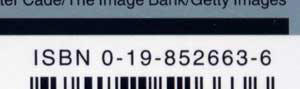
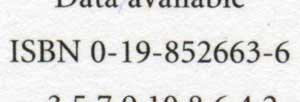
When you look at the ISBN as printed on the book shown in the photographs taken of the back cover above the barcode and from the back of the title page near the front of the book, you can see it is separated into sections by hyphens.
These photographs show the ISBN like this:
ISBN 0-19-852663-6
As 13-digit ISBNs become introduced, it may be possible to see books bearing both a 10-digit and the the equivalent 13-digit ISBNs. In this case, the 10-digit ISBN would appear like this:
ISBN-10: 0-19-852663-6
Another book that I have to hand is “In Code”, published in 2001 by Profile Books and written by Sarah Flannery with David Flannery. Its ISBN is 1861972717, but photographs of the book also show its ISBN divided into sections and preceded with the letters "ISBN".
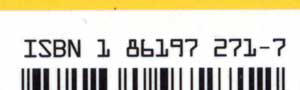
In this book the ISBN appears on the back cover as:
ISBN 1 86197 271-7
And on the back title page as:
ISBN 1 86197 271 7
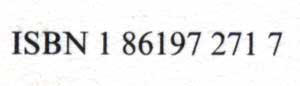
Three things to notice are that (a) one book has hyphens to separate parts of the number, while the other has spaces or spaces and a hyphen, and (b) the number of characters in at least the second and third sections varies between the two books, while (c) both books ISBNs have the same number of sections - four. In fact, it is possible for the number of characters to vary in the first three sections. The fourth section, the check digit, is always one character. There are always ten characters in total in the 10-digit ISBN. With the exception of the last character (the check digit) all characters are numeric between zero and nine. More about the check digit later.
The sections are:
- group identifier
- publisher identifier
- title identifier
- check digit
Group identifier
The group identifier identifies a country, geographical area or language area taking part in the ISBN system. This may consist of up to five digits. Group identifiers are allocated by the International ISBN Agency.
For information about the administration of the ISBN system, including details of the International ISBN Agency, see the administration of the ISBN system page.
For the examples given earlier on this page the group identifier is 0 and 1 respectively:
ISBN 0-
ISBN 1-
Publisher identifier
The publisher identifier signifies the publisher that published the book bearing that ISBN. This may consist of up to seven digits. Publisher identifiers are allocated by the publisher's ISBN agency for the group (the country, geographical area or language area) in which it falls. For information about the administration of the ISBN system, including details of national ISBN agencies, see the administration of the ISBN system page.
For the examples given earlier on this page the publisher identifier is 19 and 86197 respectively:
ISBN 0-19
ISBN 1-86197
Title identifier
The title identifier identifies the specific edition of the book allocated an ISBN. This may consist of up to six digits.%p The title identifier is also used to pad, if necessary, the length of the ISBN to 10 digits, by having preceding zeroes added to it.%p For the examples given earlier on this page the title identifier is 852663 and 271 respectively:
ISBN 0-19-852663
ISBN 1-86197-271
Check digit
The check digit is the last digit of the ISBN. Its value is calculated from the other nine digits of the ISBN and provides, as its name implies, a check on the validity of the ISBN. If, in transcribing the ISBN, a mistake is made such as a wrong number or a transposition error, there is a good chance that the resulting ISBN will be invalid, indicating the error.
Check digit calculation
The check digit is calculated by taking the nine digits comprised of the group identifier, publisher identifier and the title identifier. The first, leftmost, digit of the nine is multiplied by ten, then working from left to right, each successive digit is multiplied by one less than the one before. So the second digit is multiplied by nine, the third by eight, and so on to the ninth which is multiplied by two. Each of the nine products calculated is added together. The resulting number has the number 11 taken from it as many times as may be wholly done. The check digit is eleven minus the remainder from this casting out of elevens. An example will show this. The calculation is performed on the first example book, where the first three identifiers gives the digits 019852663.
| Calculating a Check Digit | |||||||||||||||||||
|---|---|---|---|---|---|---|---|---|---|---|---|---|---|---|---|---|---|---|---|
| ISBN without check digit | 0 | 1 | 9 | 8 | 5 | 2 | 6 | 6 | 3 | ||||||||||
| Weight | 10 | 9 | 8 | 7 | 6 | 5 | 4 | 3 | 2 | ||||||||||
| Product | 0 | + | 9 | + | 72 | + | 56 | + | 30 | + | 10 | + | 24 | + | 18 | + | 6 | = | 225 |
225 divided by 11 = 20 remainder 5.
The check digit is modulus-remainder=check digit
11 - 5 = 6
The possible values for a check digit calculated by this procedure, called modulus 11, is from zero to ten. In order to show a check digit of ten as one character, the convention is adopted of using the letter "X" to stand for a ten, like a Roman ten. That is why you may sometimes see a 10-digit ISBN that ends in an "X" rather than a numeric digit.
Check digit validation
It is possible to validate a complete ISBN, one that includes its check digit, by a similar procedure to calculating the check digit. Simply perform the same calculation, adding the check digit to the calculated product with a weighting of one. If the check digit should be the letter X, then it takes the value of 10. When the division by eleven is performed, the remainder will be zero for a valid ISBN. Please note that the validation being performed here is to check the correctness of the check digit for the rest of the numbers and their place in the number. This does not mean, necessarily, that this ISBN has ever been issued to a book, or that it is valid in a number of other ways.
| Validating a Check Digit | |||||||||||||||||||||
|---|---|---|---|---|---|---|---|---|---|---|---|---|---|---|---|---|---|---|---|---|---|
| ISBN with check digit | 0 | 1 | 9 | 8 | 5 | 2 | 6 | 6 | 3 | 6 | |||||||||||
| Weight | 10 | 9 | 8 | 7 | 6 | 5 | 4 | 3 | 2 | 1 | |||||||||||
| Product | 0 | + | 9 | + | 72 | + | 56 | + | 30 | + | 10 | + | 24 | + | 18 | + | 6 | + | 6 | = | 231 |
231 (the sum of products) divided by 11 (the modulus) = 21 remainder 0. Zero remainder = valid ISBN